
All APIs
0.45¢ per article11 datapoints
Web Article API
Clean article content from any web page, with title, authors, published date, source and language. Pass the URLs.
Sample
Sample data
Here's a sample run of 10 articles, showing the exact schema and results you can expect.
| # | Article URL | Title | Authors | Published At | Source | Language | Description | Word Count | Text | Image URL | Images |
|---|---|---|---|---|---|---|---|---|---|---|---|
1 | Dwarf planets: Astronomers discover new bodies in our solar system | 2026-11-04T12:56:12.634000+00:00 | BBC Newsround | en | There are currently five dwarf planets in our solar system that scientists agree on, but astronomers think they may have found a sixth | 278 | In big news for small planets, astronomers have discovered a brand new dwarf planet just beyond Pluto, and they think there could be lots more.
It's called 2026 ED138, and while it's not yet full confirmed, it could end up being one of the largest dwarf planets ever discovered in that part of our Solar System.
As technical advances have allowed us to see further and deeper into space, experts are discovering more bodies in the outer reaches of our solar system.
But what are dwarf planets, and what does the discovery mean?
Read on to find out.
There's a certain amount of criteria to meet before something can officially described as a 'planet'.
If something in space is big, bright, and does most of the things a planet does, but doesn't quite tick all the boxes, then it's called a dwarf planet.
Often it's about size - if something is too small to officially be a planet, it's described as a dwarf planet.
There are, so far, five confirmed dwarf planets in our Solar System: Pluto, Ceres, Eris, Haumea, and Makemake.
There's one 'planet' in our solar system that's had a bit of back and forth over its status - Pluto.
Since its discovery, it was always described as the smallest planet in our Solar System, and the furthest one from the Sun.
But in 2006 it got demoted to dwarf planet status, due to it being a lot smaller than other planets in our solar system.
Now, the debate has opened again, with NASA boss Jared Isaacman saying they're going to take a look at whether or not it can be given planet status once more. | ||||
2 | Nasa telescope launched in 2004 to plunge back to Earth after failed rescue mission | 2026-11-03T00:00:00 | the Guardian | en | Neil Gehrels Swift Observatory is expected to re-enter Earth’s atmosphere Wednesday, burning up in the process | 669 | Nasa’s Neil Gehrels Swift Observatory, which has spent two decades studying the most powerful explosions in the cosmos, is expected to re-enter the Earth’s atmosphere on Wednesday, burning up in the process.
The satellite, which was designed to operate with its three telescopes for just two years, is no longer able to steer or observe, and its re-entry is uncontrolled.
The US Space Force predicts the 3,200lb spacecraft will hit the atmosphere at about 3.30am ET on 4 November. Nasa says most of the spacecraft will burn up, but some components are expected to survive.
“Re-entry locations of any surviving components can vary from hemisphere to hemisphere and depend on when it re-enters,” the agency said in a blogpost, adding that surviving fragments are limited between 20.6 degrees south latitude and 20.6 degrees north latitude.
The agency added: “The risk of harm coming to anyone on Earth is unlikely – approximately 1 in 2,100. NASA and Space Force will continue to monitor the re-entry and update predictions.”
The observatory was launched in 2004 to explore the universe’s most powerful explosions, called cosmic gamma-ray bursts, and quickly return its observations of location and strength to Earth.
Over the course of its operational life, the observatory detected and tracked more than 2,000 gamma-ray bursts (GRBs) that are considered the most powerful explosions the universe has seen since the big bang.
Nasa says these bursts of energy occur approximately once per day and are brief, but intense, flashes of gamma radiation and come from all different directions, and can last from a few milliseconds to a few hundred seconds.
But scientists do not know what causes them – theorizing that they may be the birth of a black hole in a massive stellar explosion or produced by the collision of two neutron stars, or some other phenomenon.
Swift was launched as part of Nasa’s medium explorer, or Midex, program. In July, it observed a wandering mega black hole shredding star, which occurs when a star passes fatally close to a supermassive black hole.
“Crumbs of the splintering star heat up as they swirl around the black hole, creating a glow astronomers can see from far across the cosmos, and the black hole launches a relativistic jet into space,” said the agency.
The black hole, described as an “orphan”, lit up as it devoured the star on the outskirts of a galaxy, in what scientists call a “tidal disruption event”. Nearly every galaxy has a supermassive black hole at its center, and a tidal disruption occurs about once every 100,000 years.
The star-shedding event occurred 2,600 light-years from the center of the host galaxy, but the Swift team observed one more than 30,000 light-years away.
“We were looking for these star-shredding events as a way to find otherwise invisible supermassive black holes wandering away from the galactic cores where they usually reside,” said Robert Stein, a research fellow at the University of Maryland, College Park, and Nasa’s Goddard Space Flight Center in Greenbelt, Maryland, at the time.
A paper describing the results published in The Astrophysical Journal Letters, said: “The tidal disruption event outshone its entire host galaxy in ultraviolet wavelengths, temporarily radiating with the light of about 10 billion suns.”
Still unknown is how the black hole came to drift so far. Stein said it could have started off in a small galaxy that merged with the big one, but the key question was how common are wandering black holes.
Nasa attempted to push Swift into a higher orbit last year using a private space contractor but the mission did not succeed after they failed to rendezvous. Last month, Swift was estimated to be orbiting 171 miles above the Earth and it was commanded to end operations to prepare for re-entry.
Nasa said Swift has “broadened our understanding of a wide variety of cosmic objects and events, from active galaxies powered by supermassive black holes and stars undergoing X-ray flares, to supernova explosions and comets and asteroids in our own solar system”. | ||||
3 | The zeptoverse: what is it and how will it transform physics? | 2026-11-03T06:01:23.442000+00:00 | www.bbc.com | en | Researchers have detected signals from the smallest distances ever probed. | 679 | Scientists detect signals at the smallest scale ever explored
Scientists have picked up signals from the smallest scale of nature ever explored – 100 billion times smaller than an atom.
A world so small that some physicists have nicknamed it the zeptoverse.
The research, led by scientists based in Cambridge, was obtained from an experiment at the Large Hadron Collider (LHC).
This vast machine at the European Laboratory for Particle Physics (Cern) on the Swiss-French border smashes atoms together to break them apart and discover what is inside them.
The result is important because it could help researchers develop a new, more complete theory of how the Universe works.
'Knocking on the door' of the zeptoverse
Dark matter makes up a large part of our cosmos, and yet researchers have struggled to detect it.
Scientists know it is there because its gravitational force influences normal matter, but in all other respects it has remained completely invisible.
So in this experiment, particles were smashed together at high energy and scientists studied the material that was thrown out - the shrapnel of collisions.
One of these is a sub-atomic particle - smaller than an atom - called a beauty quark.
The particle is unstable and exists for just one and a half trillionths of a second before breaking down into other forms - decaying.
Despite its short lifetime, researchers managed to detect it interacting with other tiny particles at a scale of a billion-trillionth of a metre.
Some theories suggest that at these scales particles are more sensitive to dark matter and it could influence how the quarks interact and break down. So, detecting activity in this tiny world could help scientists detect dark matter.
"We're knocking on the door of this zeptoverse," Dr Harry Cliff, of Cambridge University who led the analysis of the data, told BBC News.
He said this sub-atomic dance provided researchers with a ringside seat to the behaviour of possible new particles.
"And what we want to do now is go in and explore and find what new particles are waiting there. And to do that, what we need is more data," Cliff added.
The 28 countries involved in the project have agreed a £150m upgrade to this detector at the Large Hadron Collider (LHCb), which would increase the frequency of these decays tenfold.
"With that we can probe inside the zeptoverse and see what's waiting," Cliff said.
But last year the UK Research and Innovation (UKRI) agency, the government body in charge of research funding, announced that it was withdrawing its share of the money for the planned upgrade.
It later announced cuts to several other particle physics and astronomy projects this Summer, including Jodrell Bank's iconic Lovell telescope.
Although this research was led by scientists based in Cambridge, because of the cuts, Prof Tim Gershon, who leads the LHCb international collaboration, told BBC News that the UK's full involvement in the research would be in doubt.
"The UK is at risk of not being involved and making really major discoveries," he told BBC News.
"But I think the biggest long-term impact comes from the fact that the UK won't get the benefits from training young people who really are our greatest product."
Among those early-career researchers is Dr Mary Richardson-Slipper, who is part of the team that made the zeptoverse discovery. She is reconsidering her future in light of the physics cuts.
"I love being here in the UK, but I am looking at jobs abroad because that seems to be where there are more opportunities at the moment," said Richardson-Slipper.
She added that "lots" of her fellow researchers working in fundamental physics had already moved.
The cuts are being made despite an overall record increase in the science budget.
Prof Brian Cox, TV presenter and particle researcher at the University of Manchester, who is not part of the research team, described the result as "important".
"It would be extraordinary to walk away from UK scientific leadership at this moment, damaging the future research programme and seriously damaging our hard-won international reputation," Cox said. | ||||
4 | Anthropic is rapidly accelerating AI development amid slowdown calls, outside research group says | 2026-11-05T18:05:02+00:00 | AP News | en | Anthropic is developing its AI systems twice as quickly as last year, despite CEO Dario Amodei’s calls to slow down model capabilities. | 864 | SAN FRANCISCO (AP) — Anthropic is developing its artificial intelligence systems around twice as quickly as it was a year ago amid the CEO’s calls to slow down the technology’s pace of improvement, according to an analysis released Thursday by an independent monitoring group.
Anthropic invited researchers from the Berkeley, California-based nonprofit, Model Evaluation and Threat Research, to review its internal data and interview staff as it prepares for its Wall Street debut with debate swirling over the potential for AI models to elude human control with catastrophic consequences.
The findings are significant because details about the technology — and its risks — have been provided primarily by AI companies, which have been encouraged by President Donald Trump’s administration to police themselves on matters of safety.
It was during the research group’s assessment period that Anthropic CEO Dario Amodei called for the AI industry to slow its work so safety measures can catch up. In a Sept. 12 essay responding to mounting concerns about runaway AI, he urged the AI world to “slow the pace at which we improve the capabilities of AI models.”
Sam McCandlish, one of Anthropic’s co-founders, responded to the report Thursday in a lengthy post on X, writing that many of METR’s conclusions match his own. “AI is speeding up our research, but it’s hard to say exactly how much,” he wrote.
The San Francisco-based company is planning to go public later this month in what could be the biggest initial public offering of stock ever.
AI is playing a bigger role in its own improvement
METR estimated that Anthropic is improving the capabilities of its models to do “well specified tasks” around twice as fast as it was a year earlier. The nonprofit’s researchers said they believed much of the reason for the faster development is the help of AI itself.
Anthropic has said its Claude chatbot increasingly is helping the company develop newer, more advanced versions of itself.
METR has conducted evaluations on model capabilities for Anthropic, OpenAI and other labs for years. The nonprofit is funded through donations and does not accept compensation for its work, but AI companies it has partnered with for evaluations have provided access and tokens, which METR uses for evaluations, research and engineering.
One of its two reports was based on analysis of Anthropic’s internal data provided by the company over a period of about 11 weeks, from mid-August through late October, as well as employee interviews.
METR said its assessment focused on a few key questions, including whether the growth rate of Anthropic’s internal capabilities has accelerated and how much of that was attributable to AI. The group said it was given “unprecedented access to internal data” at Anthropic.
METR also reviewed both a public risk report Anthropic published in August and a private version, as well as other nonpublic data, and the organization said the public report “overall understates the level of acceleration that was occurring.”
Anthropic’s redactions to the report limited how METR could communicate more detailed estimates of acceleration, the nonprofit said.
McCandlish acknowledged in his statement that the redactions make it harder for others to “check METR’s work,” but added that the company decided that sharing “exactly what is driving the speedup isn’t the right thing to do,” because it’s both “commercially sensitive” and “risks handing out a road map for others to go faster.”
He said this work with METR is separate from the evaluators the company is welcoming as part of its “commitment to pacing the frontier,” and he said it shows why they are a good idea.
“How quickly AI progress is accelerating has many important safety implications, since it determines how quickly the risks from advanced models increase,” wrote McCandlish, who is also Anthropic’s responsible scaling officer. “But, because most research happens within the frontier labs, it’s difficult for external observers and policymakers to get a strong sense of what that rate is.”
Assessors see little holding back AI’s progress
The report was peppered with caveats. METR said it could be overstating its findings, because the acceleration might only be limited to “well-specified tasks.”
METR said it was able to “confidently” rule out the growth of computing power used in training AI models as the reason for the acceleration. Traditionally, the amount of computing power, known as compute, is directly related to how well an AI model performs. The researchers said their guess was that the improvement owed to using AI itself to improve AI.
A key concern, METR said, is that using AI to improve itself could start to compound the acceleration. Researchers found there were no “bottlenecks” such as restrictions on computing power or data holding back Anthropic’s AI progress.
“We understand that AI is not yet able to make highly significant and fully autonomous contributions to the most important parts of the model training process,” the report said. However, Anthropic researchers described significant “signs of life” implying that could happen soon, METR said.
Amodei touched on this issue in his September essay, saying AI advances have been driven primarily by the concept of recursive self-improvement, or what he defined as “AI’s growing ability to build the next generation of AI.” | ||||
5 | NASA space telescope plunges to Earth after two decades studying cosmic explosions | 2026-11-04T19:41:38+00:00 | AP News | en | One of NASA's premier space telescopes has plunged to Earth, ending its 22-year investigation of the universe's biggest explosions. | 313 | CAPE CANAVERAL, Fla. (AP) — One of NASA’s premier space telescopes plunged to Earth on Wednesday, ending its 22-year investigation of the universe’s biggest explosions.
The Swift Observatory’s demise came less than three months after a long-shot rescue mission failed.
The U.S. Space Force confirmed Swift’s reentry near Indonesia after tracking its sinking orbit, the result of intense solar activity the past few years.
NASA hired a private company to whip together an orbit-boosting effort, but Katalyst Space’s three-armed robotic craft ran into trouble following its July launch and came crashing down in September.
It was not immediately known how much of the 1 ½-ton spacecraft burned up in the atmosphere. NASA anticipated some of the denser pieces surviving.
Swift rocketed into orbit in 2004 on what was expected to be a two-year study of gamma ray bursts and exploding stars. It observed thousands of them over a mission that lasted 11 times longer than planned, serving as a first responder for other telescopes that could probe deeper.
NASA is gauging industry’s interest in mounting a rescue mission for another observatory whose orbit is being chipped away by solar storms: the Hubble Space Telescope. Launched in 1990, Hubble is expected to come crashing down by the mid-2030s, according to recent analyses.
The space agency is looking for input from private companies on whether and how they might boost Hubble’s orbit, upgrade its systems or guide it to a controlled reentry — or all three. Any such mission would need to happen by 2032.
Unlike the rush job with Swift, the space agency has more time to explore options for saving Hubble, said Nicky Fox, NASA’s science mission chief.
“Hubble still has important science ahead of it,” NASA Administrator Jared Isaacman said in a statement, “and we should be looking at every reasonable opportunity to keep it delivering for as long as possible.”
___ | ||||
6 | The Joel Test: 12 Steps to Better Code | — | 2000-08-09T00:00:00 | Joel on Software | en | Have you ever heard of SEMA? It's a fairly esoteric system for measuring how good a software team is. No, wait! Don't follow that link! It will take you about six years just to understand that stuff. So I've come up with my own, highly irresponsible, sloppy test to rate the quality of a software… | 3,416 | Have you ever heard of SEMA? It’s a fairly esoteric system for measuring how good a software team is. No, wait! Don’t follow that link! It will take you about six years just to understand that stuff. So I’ve come up with my own, highly irresponsible, sloppy test to rate the quality of a software team. The great part about it is that it takes about 3 minutes. With all the time you save, you can go to medical school.
The neat thing about The Joel Test is that it’s easy to get a quick yes or no to each question. You don’t have to figure out lines-of-code-per-day or average-bugs-per-inflection-point. Give your team 1 point for each “yes” answer. The bummer about The Joel Test is that you really shouldn’t use it to make sure that your nuclear power plant software is safe.
A score of 12 is perfect, 11 is tolerable, but 10 or lower and you’ve got serious problems. The truth is that most software organizations are running with a score of 2 or 3, and they need serious help, because companies like Microsoft run at 12 full-time.
Of course, these are not the only factors that determine success or failure: in particular, if you have a great software team working on a product that nobody wants, well, people aren’t going to want it. And it’s possible to imagine a team of “gunslingers” that doesn’t do any of this stuff that still manages to produce incredible software that changes the world. But, all else being equal, if you get these 12 things right, you’ll have a disciplined team that can consistently deliver.
1. Do you use source control?
I’ve used commercial source control packages, and I’ve used CVS, which is free, and let me tell you, CVS is fine. But if you don’t have source control, you’re going to stress out trying to get programmers to work together. Programmers have no way to know what other people did. Mistakes can’t be rolled back easily. The other neat thing about source control systems is that the source code itself is checked out on every programmer’s hard drive — I’ve never heard of a project using source control that lost a lot of code.
2. Can you make a build in one step?
By this I mean: how many steps does it take to make a shipping build from the latest source snapshot? On good teams, there’s a single script you can run that does a full checkout from scratch, rebuilds every line of code, makes the EXEs, in all their various versions, languages, and #ifdef combinations, creates the installation package, and creates the final media — CDROM layout, download website, whatever.
If the process takes any more than one step, it is prone to errors. And when you get closer to shipping, you want to have a very fast cycle of fixing the “last” bug, making the final EXEs, etc. If it takes 20 steps to compile the code, run the installation builder, etc., you’re going to go crazy and you’re going to make silly mistakes.
For this very reason, the last company I worked at switched from WISE to InstallShield: we required that the installation process be able to run, from a script, automatically, overnight, using the NT scheduler, and WISE couldn’t run from the scheduler overnight, so we threw it out. (The kind folks at WISE assure me that their latest version does support nightly builds.)
3. Do you make daily builds?
When you’re using source control, sometimes one programmer accidentally checks in something that breaks the build. For example, they’ve added a new source file, and everything compiles fine on their machine, but they forgot to add the source file to the code repository. So they lock their machine and go home, oblivious and happy. But nobody else can work, so they have to go home too, unhappy.
Breaking the build is so bad (and so common) that it helps to make daily builds, to insure that no breakage goes unnoticed. On large teams, one good way to insure that breakages are fixed right away is to do the daily build every afternoon at, say, lunchtime. Everyone does as many checkins as possible before lunch. When they come back, the build is done. If it worked, great! Everybody checks out the latest version of the source and goes on working. If the build failed, you fix it, but everybody can keep on working with the pre-build, unbroken version of the source.
On the Excel team we had a rule that whoever broke the build, as their “punishment”, was responsible for babysitting the builds until someone else broke it. This was a good incentive not to break the build, and a good way to rotate everyone through the build process so that everyone learned how it worked.
Read more about daily builds in my article Daily Builds are Your Friend.
4. Do you have a bug database?
I don’t care what you say. If you are developing code, even on a team of one, without an organized database listing all known bugs in the code, you are going to ship low quality code. Lots of programmers think they can hold the bug list in their heads. Nonsense. I can’t remember more than two or three bugs at a time, and the next morning, or in the rush of shipping, they are forgotten. You absolutely have to keep track of bugs formally.
Bug databases can be complicated or simple. A minimal useful bug database must include the following data for every bug:
complete steps to reproduce the bug
expected behavior
observed (buggy) behavior
who it’s assigned to
whether it has been fixed or not
If the complexity of bug tracking software is the only thing stopping you from tracking your bugs, just make a simple 5 column table with these crucial fields and start using it.
For more on bug tracking, read Painless Bug Tracking.
5. Do you fix bugs before writing new code?
The very first version of Microsoft Word for Windows was considered a “death march” project. It took forever. It kept slipping. The whole team was working ridiculous hours, the project was delayed again, and again, and again, and the stress was incredible. When the dang thing finally shipped, years late, Microsoft sent the whole team off to Cancun for a vacation, then sat down for some serious soul-searching.
What they realized was that the project managers had been so insistent on keeping to the “schedule” that programmers simply rushed through the coding process, writing extremely bad code, because the bug fixing phase was not a part of the formal schedule. There was no attempt to keep the bug-count down. Quite the opposite. The story goes that one programmer, who had to write the code to calculate the height of a line of text, simply wrote “return 12;” and waited for the bug report to come in about how his function is not always correct. The schedule was merely a checklist of features waiting to be turned into bugs. In the post-mortem, this was referred to as “infinite defects methodology”.
To correct the problem, Microsoft universally adopted something called a “zero defects methodology”. Many of the programmers in the company giggled, since it sounded like management thought they could reduce the bug count by executive fiat. Actually, “zero defects” meant that at any given time, the highest priority is to eliminate bugs before writing any new code. Here’s why.
In general, the longer you wait before fixing a bug, the costlier (in time and money) it is to fix.
For example, when you make a typo or syntax error that the compiler catches, fixing it is basically trivial.
When you have a bug in your code that you see the first time you try to run it, you will be able to fix it in no time at all, because all the code is still fresh in your mind.
If you find a bug in some code that you wrote a few days ago, it will take you a while to hunt it down, but when you reread the code you wrote, you’ll remember everything and you’ll be able to fix the bug in a reasonable amount of time.
But if you find a bug in code that you wrote a few months ago, you’ll probably have forgotten a lot of things about that code, and it’s much harder to fix. By that time you may be fixing somebody else’s code, and they may be in Aruba on vacation, in which case, fixing the bug is like science: you have to be slow, methodical, and meticulous, and you can’t be sure how long it will take to discover the cure.
And if you find a bug in code that has already shipped, you’re going to incur incredible expense getting it fixed.
That’s one reason to fix bugs right away: because it takes less time. There’s another reason, which relates to the fact that it’s easier to predict how long it will take to write new code than to fix an existing bug. For example, if I asked you to predict how long it would take to write the code to sort a list, you could give me a pretty good estimate. But if I asked you how to predict how long it would take to fix that bug where your code doesn’t work if Internet Explorer 5.5 is installed, you can’t even guess, because you don’t know (by definition) what’s causing the bug. It could take 3 days to track it down, or it could take 2 minutes.
What this means is that if you have a schedule with a lot of bugs remaining to be fixed, the schedule is unreliable. But if you’ve fixed all the known bugs, and all that’s left is new code, then your schedule will be stunningly more accurate.
Another great thing about keeping the bug count at zero is that you can respond much faster to competition. Some programmers think of this as keeping the product ready to ship at all times. Then if your competitor introduces a killer new feature that is stealing your customers, you can implement just that feature and ship on the spot, without having to fix a large number of accumulated bugs.
6. Do you have an up-to-date schedule?
Which brings us to schedules. If your code is at all important to the business, there are lots of reasons why it’s important to the business to know when the code is going to be done. Programmers are notoriously crabby about making schedules. “It will be done when it’s done!” they scream at the business people.
Unfortunately, that just doesn’t cut it. There are too many planning decisions that the business needs to make well in advance of shipping the code: demos, trade shows, advertising, etc. And the only way to do this is to have a schedule, and to keep it up to date.
The other crucial thing about having a schedule is that it forces you to decide what features you are going to do, and then it forces you to pick the least important features and cut them rather than slipping into featuritis (a.k.a. scope creep).
Keeping schedules does not have to be hard. Read my article Painless Software Schedules, which describes a simple way to make great schedules.
7. Do you have a spec?
Writing specs is like flossing: everybody agrees that it’s a good thing, but nobody does it.
I’m not sure why this is, but it’s probably because most programmers hate writing documents. As a result, when teams consisting solely of programmers attack a problem, they prefer to express their solution in code, rather than in documents. They would much rather dive in and write code than produce a spec first.
At the design stage, when you discover problems, you can fix them easily by editing a few lines of text. Once the code is written, the cost of fixing problems is dramatically higher, both emotionally (people hate to throw away code) and in terms of time, so there’s resistance to actually fixing the problems. Software that wasn’t built from a spec usually winds up badly designed and the schedule gets out of control. This seems to have been the problem at Netscape, where the first four versions grew into such a mess that management stupidly decided to throw out the code and start over. And then they made this mistake all over again with Mozilla, creating a monster that spun out of control and took several years to get to alpha stage.
My pet theory is that this problem can be fixed by teaching programmers to be less reluctant writers by sending them off to take an intensive course in writing. Another solution is to hire smart program managers who produce the written spec. In either case, you should enforce the simple rule “no code without spec”.
Learn all about writing specs by reading my 4-part series.
8. Do programmers have quiet working conditions?
There are extensively documented productivity gains provided by giving knowledge workers space, quiet, and privacy. The classic software management book Peopleware documents these productivity benefits extensively.
Here’s the trouble. We all know that knowledge workers work best by getting into “flow”, also known as being “in the zone”, where they are fully concentrated on their work and fully tuned out of their environment. They lose track of time and produce great stuff through absolute concentration. This is when they get all of their productive work done. Writers, programmers, scientists, and even basketball players will tell you about being in the zone.
The trouble is, getting into “the zone” is not easy. When you try to measure it, it looks like it takes an average of 15 minutes to start working at maximum productivity. Sometimes, if you’re tired or have already done a lot of creative work that day, you just can’t get into the zone and you spend the rest of your work day fiddling around, reading the web, playing Tetris.
The other trouble is that it’s so easy to get knocked out of the zone. Noise, phone calls, going out for lunch, having to drive 5 minutes to Starbucks for coffee, and interruptions by coworkers — especially interruptions by coworkers — all knock you out of the zone. If a coworker asks you a question, causing a 1 minute interruption, but this knocks you out of the zone badly enough that it takes you half an hour to get productive again, your overall productivity is in serious trouble. If you’re in a noisy bullpen environment like the type that caffeinated dotcoms love to create, with marketing guys screaming on the phone next to programmers, your productivity will plunge as knowledge workers get interrupted time after time and never get into the zone.
With programmers, it’s especially hard. Productivity depends on being able to juggle a lot of little details in short term memory all at once. Any kind of interruption can cause these details to come crashing down. When you resume work, you can’t remember any of the details (like local variable names you were using, or where you were up to in implementing that search algorithm) and you have to keep looking these things up, which slows you down a lot until you get back up to speed.
Here’s the simple algebra. Let’s say (as the evidence seems to suggest) that if we interrupt a programmer, even for a minute, we’re really blowing away 15 minutes of productivity. For this example, lets put two programmers, Jeff and Mutt, in open cubicles next to each other in a standard Dilbert veal-fattening farm. Mutt can’t remember the name of the Unicode version of the strcpy function. He could look it up, which takes 30 seconds, or he could ask Jeff, which takes 15 seconds. Since he’s sitting right next to Jeff, he asks Jeff. Jeff gets distracted and loses 15 minutes of productivity (to save Mutt 15 seconds).
Now let’s move them into separate offices with walls and doors. Now when Mutt can’t remember the name of that function, he could look it up, which still takes 30 seconds, or he could ask Jeff, which now takes 45 seconds and involves standing up (not an easy task given the average physical fitness of programmers!). So he looks it up. So now Mutt loses 30 seconds of productivity, but we save 15 minutes for Jeff. Ahhh!
9. Do you use the best tools money can buy?
Writing code in a compiled language is one of the last things that still can’t be done instantly on a garden variety home computer. If your compilation process takes more than a few seconds, getting the latest and greatest computer is going to save you time. If compiling takes even 15 seconds, programmers will get bored while the compiler runs and switch over to reading The Onion, which will suck them in and kill hours of productivity.
Debugging GUI code with a single monitor system is painful if not impossible. If you’re writing GUI code, two monitors will make things much easier.
Most programmers eventually have to manipulate bitmaps for icons or toolbars, and most programmers don’t have a good bitmap editor available. Trying to use Microsoft Paint to manipulate bitmaps is a joke, but that’s what most programmers have to do.
At my last job, the system administrator kept sending me automated spam complaining that I was using more than … get this … 220 megabytes of hard drive space on the server. I pointed out that given the price of hard drives these days, the cost of this space was significantly less than the cost of the toilet paper I used. Spending even 10 minutes cleaning up my directory would be a fabulous waste of productivity.
Top notch development teams don’t torture their programmers. Even minor frustrations caused by using underpowered tools add up, making programmers grumpy and unhappy. And a grumpy programmer is an unproductive programmer.
To add to all this… programmers are easily bribed by giving them the coolest, latest stuff. This is a far cheaper way to get them to work for you than actually paying competitive salaries!
10. Do you have testers?
If your team doesn’t have dedicated testers, at least one for every two or three programmers, you are either shipping buggy products, or you’re wasting money by having $100/hour programmers do work that can be done by $30/hour testers. Skimping on testers is such an outrageous false economy that I’m simply blown away that more people don’t recognize it.
Read Top Five (Wrong) Reasons You Don’t Have Testers, an article I wrote about this subject.
11. Do new candidates write code during their interview?
Would you hire a magician without asking them to show you some magic tricks? Of course not.
Would you hire a caterer for your wedding without tasting their food? I doubt it. (Unless it’s Aunt Marge, and she would hate you forever if you didn’t let her make her “famous” chopped liver cake).
Yet, every day, programmers are hired on the basis of an impressive resumé or because the interviewer enjoyed chatting with them. Or they are asked trivia questions (“what’s the difference between CreateDialog() and DialogBox()?”) which could be answered by looking at the documentation. You don’t care if they have memorized thousands of trivia about programming, you care if they are able to produce code. Or, even worse, they are asked “AHA!” questions: the kind of questions that seem easy when you know the answer, but if you don’t know the answer, they are impossible.
Please, just stop doing this. Do whatever you want during interviews, but make the candidate write some code. (For more advice, read my Guerrilla Guide to Interviewing.)
12. Do you do hallway usability testing?
A hallway usability test is where you grab the next person that passes by in the hallway and force them to try to use the code you just wrote. If you do this to five people, you will learn 95% of what there is to learn about usability problems in your code.
Good user interface design is not as hard as you would think, and it’s crucial if you want customers to love and buy your product. You can read my free online book on UI design, a short primer for programmers. | |||
7 | Sinkholes, scarred land and scapegoats: the scourge of illegal gold mining in Johannesburg | 2026-10-30T00:00:00 | the Guardian | en | There is no end in sight for the drivers of illegal mining, while police action appears ineffective | 1,008 | Cora Bailey has been encountering illegal miners ever since she first started treating injured animals in the townships around Roodepoort, west of Johannesburg, in 1991. But as the price of gold has soared, so too has activity in the abandoned mine shafts that mark the area.
In late September, dozens of zama zamas – the name given to illegal miners in South Africa, meaning roughly “to take a chance” in Zulu – arrived to dig for gold across the dirt road from her charity, Claw (Community Led Animal Welfare).
Soon, they were taking water for their panning and processing from the organisation’s two 25,000-litre water tanks, which are filled irregularly by the city government for the 100 or so rescued and injured animals on site.
“We’ve asked them really nicely and haven’t ever refused them water to drink … But, for the first time ever, we closed the gate at 12 [midday], because we literally had about two buckets of water left,” Bailey said in mid-October.
Police told her that the scale of the illegal mining was too big for them to do anything about, she said at the time. About a week later, officers sheared away the grass that had partly hidden the zama zamas. But within a few days a smaller group had returned, although Bailey said they were now taking Claw’s water only for drinking.
South Africa’s police regularly trumpet their success in tackling illegal mining. On 19 October, they said they had arrested 71 suspected zama zamas across the country in the previous week.
However, researchers put the number of illegal miners in the tens of thousands. In 2019, Marcena Hunter, a researcher at the Global Initiative against Transnational Organised Crime, estimated that a tenth of South Africa’s gold production, worth about $1bn, was being exported illegally.
Police operations have also led to tragedy. In 2025, 93 bodies were pulled from a mine shaft in Stilfontein, after officers blocked food and water from being delivered underground.
Meanwhile, there is no end in sight to the dynamics driving illegal mining, including the high price of gold, poverty, unemployment, corrupt politicians and police profiting, and the failure of mining companies to fulfil their legal obligation to seal mining shafts when they cease operating.
South Africa’s modern history is tied to mining. In 1884, gold was found on a farm, sparking a gold rush that led to the creation of Johannesburg. Gold production peaked in the 1970s, but South Africa was the world’s largest producer, a title it held for more than a century, until 2007.
In 2009, Morris Viljoen, a geology professor at the University of the Witwatersrand, estimated that the reef that gave the university its name had produced more than a third of the gold ever mined globally. Claw is housed in the old offices of the Durban Deep mine, which shut at the turn of the century, having once lent its name to an Elton John song.
The city government claims there is still 40,000 tonnes of gold underground in the region. But, with the remainder lying ever deeper, the costs of recovering it have risen.
Mining companies are supposed to seal up old mine shafts and rehabilitate the environment around them. However, in 2025 there were “6,100 derelict and ownerless mines and 1,170 unsafe mine openings”, the mining minister, Gwede Mantashe, said in response to a parliamentary question.
Zama zamas have stepped into those voids left in the earth. While there is no comprehensive data on them, experts agree that a majority are from neighbouring countries, principally Lesotho, Mozambique and Zimbabwe.
The skyline south of Johannesburg is punctuated by the pale yellow ridges of mine dumps. Increasingly, the ground is also caving open.
For politicians seeking votes in local elections on 4 November, the culprit is clear: illegal miners. In May, Kenny Kunene, the Johannesburg council member responsible for transport, took journalists on a tour of sinkholes that he claimed were the fault of zama zamas, including a section of Wemmer Pan Road that had completely collapsed.
The road was once the main artery linking the city’s central business district to the south-eastern suburbs. In one section it has completely disappeared, now raw earth pitted with the holes where illegal miners have been digging.
However, when it comes to sinkholes, experts say zama zamas are being scapegoated.
Rosalind Morris, an anthropology professor at Columbia University, who has worked extensively with illegal miners, noted that the porous dolomitic rock to Johannesburg’s south and west becomes unstable when water is removed.
“The biggest culprit of sinkholes in South Africa is formal industrial mining, which dewaters at a scale of hundreds of millions of gallons of water removed from underground every day,” she said.
“There are areas where there is a lot of residual gold, which are being very intensely mined by zama zamas, and some of that definitely causes structural collapse, there’s no doubt about it. But the idea that this was invented or caused for the first time by zama zamas is completely fallacious.”
Zama zamas are also frequently blamed for violence in mining areas, including a September mass shooting in Wedela township, west of Johannesburg. However, David van Wyk, the lead researcher at Bench Marks Foundation, said culpability laid with the often-feuding gangs that controlled access to the shafts.
“The guys working in the mine are actually super-exploited cheap labour … The guys with the guns are the guys who take the gold,” he said. “They don’t go underground.”
In Khutsong, about 50 miles (80km) west of Johannesburg, illegal miners, local and foreign, kept the township afloat, said Vusi Cele, the youth secretary for the local branch of Mining Affected Communities United in Action, a campaign group that advocates for “artisanal miners” to be granted mining licences. “Without those rents, it’s a ghost town,” he said.
While Cele, 33, currently hustles above ground selling mobile phone covers and screen protectors, he said he too would mine if he could get a licence. “On the surface there’s peanuts,” he said. “Underground there’s money.” | ||||
8 | Shops looted as German cost-of-living protests turn violent | 2026-11-01T01:59:57.460000+00:00 | BBC News | en | The protests in cities across Germany - including Berlin, Hamburg and Frankfurt - came on the same day hundreds of thousands also protested in France. | 877 | Rioters looted shops in central Frankfurt late on Saturday as clashes erupted in German cities over the cost of living.
Besides Frankfurt - Germany's financial hub - there were incidents of violence in Berlin, Cologne and Hamburg, with police saying they used water cannon to disperse protesters who were targeting emergency workers with fireworks, stones and bottles.
Thousands joined largely peaceful demonstrations earlier in the day. They were organised by the campaign group Gen Z regelt - meaning "Gen Z takes charge" - to protest against underfunding in schools, the high cost of living, public spending cuts and military service.
The unrest in Germany follows similar youth-led mass protests in France, where more than 320,000 people also demonstrated on Saturday.
On Sunday, Germany's Interior Minister Alexander Dobrindt told Bild newspaper that overnight police had prevented "violence like that seen in Paris" in recent weeks and called for "harsh punishments" for rioters and looters.
Overnight, a large section of Frankfurt's main shopping street was closed off by police. A police spokesperson said many arrests were made in the city.
Authorities in Frankfurt, Munich and Berlin reported as many as 18,000 protesters, roughly half of what the organisers had estimated on their website. German media say tens of thousands protested in German cities on Saturday.
Gen Z regelt spokesperson Lina Friedrich said the demonstrations were "to fight for peace and freedom, rather than for war and coercion".
She said: "What matters most to us is better support for the health and education systems. We are against compulsory military service and we are in favour of a fairer distribution of the burden."
On Saturday night Frankfurt police said "violent riots" were occurring in the city centre and that special police units had been deployed.
The windows of several shops had been smashed and molotov cocktails were thrown at emergency services, police said.
Officials said the windows of a gun shop were smashed and that they had seized two weapons after arresting a suspect. People also broke into other shops, stealing items like trainers.
Roman Poseck, interior minister of Hesse state, of which Frankfurt is the biggest city, said that "around 100 clearly identified left-wing extremists" had infiltrated the protest in the city. He added that it was "shameful" how the protests had ended.
"We all have those images from France in our minds - looting, burning houses, burning police vehicles, and attacks on police officers... France must not be held up as a model in this regard."
Police said the situation calmed down overnight into Sunday in the city.
Similar instances took place in other German cities, following largely peaceful demonstrations.
In Cologne, police said officers were attacked near the main train station, with bottles thrown and a bicycle launched.
Cologne's police chief Johannes Hermanns said it was "deeply saddening that young people who wanted to peacefully demonstrate for their future were infiltrated today by extremists who had nothing but violence in mind".
A smaller demonstration in the evening in Berlin - following larger protests in the day - resulted in 27 police officers being injured, and up to 56 people temporarily detained, Berlin police said.
In Hamburg, people dressed in black set off fireworks and set barricades on fire, with public broadcaster NDR reporting that 120 people were arrested.
The protests in Germany took place on the same day as other large-scale demonstrations in Europe.
In France, more than 320,000 people took part in a third consecutive weekend of largely peaceful protests in cities across the country, demanding action on the high cost of living and poor public services, especially in the education sector.
Thousands of police officers were deployed across the country, and officers fired tear gas at demonstrators in some cities.
There were more than 770 arrests across France during the demonstrations on Saturday, roughly half as many as the previous week's protests, the French interior ministry said.
French Interior Minister Laurent Nuñez said a police officer had been injured by a molotov cocktail and French prosecutors later launched an attempted murder probe.
Police in Paris said several hundred rioters had attacked security forces with projectiles.
French protest organisers, the Gilet Jaune, or Yellow Vests, have said dozens of protesters have been seriously injured during recent demonstrations across the country, with many hurt by "grenades".
France suspended the use of one type of stun grenade while policing student protests in early October after a 15-year-old's hand was blown off, but French newspaper Le Monde has reported, external that police have continued to use a different model in subsequent protests.
Protests also took place in Italy, with some clashes between police and demonstrators in Rome and Turin.
In Portugal, police moved to clear a new tent camp that had been assembled after thousands marched to protest against a rental bill that they argue could worsen a housing crisis in the country, where house prices have more than doubled over the past decade.
Mostly young protesters have recently taken to the streets in a swathe of European nations: France, Belgium, Ireland, Spain, Portugal, Italy, Greece, Serbia and Albania.
While the specific demands vary from country to country, the protesters have largely focused on cost-of-living issues, such as access to housing, the quality of education and cuts to public services. | ||||
9 | Data centers are now a midterm issue, even in Brooklyn | 2026-10-31T00:00:00 | TechCrunch | en | At a Brooklyn midterm party five days before Election Day, every conversation, from a council member’s fireside chat to a debate about the Democratic Party, kept circling back to AI and data centers. | 1,265 | On Thursday evening, I slipped on my neon yellow heels and a floral mini dress. It’s New York, so I can wear whatever I want to a midterm election event full of media types, techies, policy advocates, and, well, does anyone else even exist at these things? I walked into the dimly blue-lit Brooklyn warehouse and was surprised to see the room already filling up.
Newsreel, the media company founded by former Forbes and Newsweek reporter Jack Brewster, hosted the event, and the lineup was heavy-hitting. Kenneth Schlenker, co-founder of the focus app Opal, sat down for a fireside chat about “the state of attention,” and Aryan Ranjan, who built the campaign management software Baraza, gave a midterm forecast. I, meanwhile, was moderating a panel on data centers.
Brewster said the goal was for people to “put their phones away and talk to each other about the election, five days out.”
As the evening progressed, however, one topic consumed nearly every conversation: AI, data centers, and the backlash against the growing technocracy.
Lately, as a tech reporter, I’ve noticed a growing chasm between tech and everyone else. I spend most of my days talking to people who see the benefits of AI, who are so ambitious in building it and so optimistic that it will succeed that, when I talk to people beyond the tech world, I forget how ugly it all seems to them. Outside the tech bubble, data centers and AI have become such an intense ballot-box issue that they could sway some midterm races on November 3.
A recent report from Data Center Watch found that almost $200 billion in data center projects were delayed, stalled, or blocked in the first half of 2026 due to political and community opposition. Meanwhile, states like Pennsylvania, Georgia, Texas, New York, and Virginia are considering more guardrails and transparency around data centers’ rapid development. Hundreds of new data centers are planned in Virginia alone, a state already nicknamed the “data center capital of the world.”
A fireside chat with New York City Council member Chi Ossé, just before my panel, set the tone. AI came up near the end; Ossé said he doesn’t really use it. To me, though, he didn’t seem to be for or against it. He mostly emphasized that he would like to see tech executives held more accountable and trillionaires like Elon Musk taxed more. He described himself as a democratic socialist, but a “law and order” one. When CEOs talk about a technology that could deplete 10% of human civilization, he said, “they should be called to testify in front of Congress.”
My panel was up next. I moderated a discussion with Maia Woluchem, a technology and human rights researcher, and Hilary Flint, an environmental and public health advocate, about data centers. As I took the stage, I decided to get a better read on the crowd. I asked, “Who here is pro-AI data center?” and was promptly booed. Our conversation covered a range of topics and emotions. People are upset that big tech companies appear to be cutting secret deals with local officials to build billion-dollar data centers. In some cases, zoning rules make it unclear what is being built until it’s too late to protest.
At the same time, people are struggling with the cost of living and doing everything they can to hold onto what’s left of the American Dream, while tech leaders talk about AI replacing workers, or even humanity itself. Residents feel they have lost control over what happens in their communities, and they worry about the environmental and health risks. The panel agreed that data centers are the physical embodiment of people’s fears and anger toward the tech class and the rapid pace of technology.
“What is a life worth?” Flint said when I brought up the benefits that some communities have seen from data center build-outs. People still protest, she said, because they “value their lives a little bit more than a temporary check.”
The panel after mine featured NewsNation host Batya Ungar-Sargon; political strategist Morris Katz, who worked on Zohran Mamdani’s campaign; and Vox’s Astead Herndon. They were supposed to be talking about the future of the Democratic Party. But once again, the conversation shifted to data centers. Ungar-Sargon noted that some labor unions support data centers because of the jobs they promise. (Reports show that data centers create many jobs initially, but those jobs are not permanent once construction ends.)
“There used to be a lot of pride in a community in the Rust Belt about very ugly, enormous buildings in their communities because everybody worked there,” she said, nodding to an earlier comment I’d made about data centers being ugly. “And they knew that building represented prosperity for themselves, stability for their children, and a future and a piece of the American dream.”
Herndon noted that Vivek Ramaswamy was booed for making a similar point in Ohio, a Rust Belt state. “I just want to reinforce the lack of consent happening,” he said. “Because that’s true among Republicans in those places and I’ve watched it.” Katz was also skeptical. “It’s the same people who have taken so many union jobs away,” he said. “The same institutional powers that have robbed labor and working people of jobs and profit. Now coming back to essentially finish the job and take whatever scraps remain.”
Along the warehouse walls, I noticed sticky notes answering posted questions, including “Will we ever be able to get Big Money out of politics?” “God, I hope so,” one note said.
People rushed the bar when the panel ended, and techno music began to blast. They broke into small groups, where AI and data centers were once again the topic, this time in more private conversations. I asked Brewster if he was surprised by how much of the conversation focused on AI and data centers.
“It came up in every conversation onstage, and it was the second-most common topic in the questions people sent us when they RSVP’d,” he said, adding that it was happening even in New York, where data centers aren’t very visible. “AI has become an election issue for regular voters,” he said. “In rural communities, the backlash is about feeling replaced. In a place like Brooklyn, it’s more about who gets rich from it.”
Before leaving, I made the rounds, asking people to name the craziest thing they’d seen in tech this year. Two tech founders mentioned the AI assistant startup Instinct, while a non-tech person named Sam Altman
Another non-tech person brought up the rise of deepfakes and AI art. AI art, she said, is starting to signal cheapness. That may be why luxury brands are going the other way: Prada’s holiday campaign features hand-drawn illustrations, and Hermès has been spotlighting artists’ handmade work on Instagram.
On my way out, I spoke to a software engineer who said the craziest thing she’d seen this year was a person who painted their nails orange for Halloween and was asked if it was a tribute to the Anthropic IPO. I admitted that I, too, had once worn a burnt orange dress and briefly thought of myself as the Claude logo.
She later told me data centers are popping up in her Southern California hometown, too. Hearing that, I thought for the first time about how I’d feel if one popped up in mine. She grew up in a Chinese immigrant community, where neighbors are putting signs in their yards showing dragons choking a data center.
The signs have since been translated into other languages, she said. | ||||
10 | Things we learned about LLMs in 2024 | 2024-12-31T00:00:00 | Simon Willison’s Weblog | en | A lot has happened in the world of Large Language Models over the course of 2024. Here’s a review of things we figured out about the field in the past … | 6,817 | A lot has happened in the world of Large Language Models over the course of 2024. Here’s a review of things we figured out about the field in the past twelve months, plus my attempt at identifying key themes and pivotal moments.
This is a sequel to my review of 2023.
In this article:
The GPT-4 barrier was comprehensively broken
Some of those GPT-4 models run on my laptop
LLM prices crashed, thanks to competition and increased efficiency
Multimodal vision is common, audio and video are starting to emerge
Voice and live camera mode are science fiction come to life
Prompt driven app generation is a commodity already
Universal access to the best models lasted for just a few short months
“Agents” still haven’t really happened yet
Evals really matter
Apple Intelligence is bad, Apple’s MLX library is excellent
The rise of inference-scaling “reasoning” models
Was the best currently available LLM trained in China for less than $6m?
The environmental impact got better
The environmental impact got much, much worse
The year of slop
Synthetic training data works great
LLMs somehow got even harder to use
Knowledge is incredibly unevenly distributed
LLMs need better criticism
Everything tagged “llms” on my blog in 2024
The GPT-4 barrier was comprehensively broken
In my December 2023 review I wrote about how We don’t yet know how to build GPT-4—OpenAI’s best model was almost a year old at that point, yet no other AI lab had produced anything better. What did OpenAI know that the rest of us didn’t?
I’m relieved that this has changed completely in the past twelve months. 18 organizations now have models on the Chatbot Arena Leaderboard that rank higher than the original GPT-4 from March 2023 (GPT-4-0314 on the board)—70 models in total.
The earliest of those was Google’s Gemini 1.5 Pro, released in February. In addition to producing GPT-4 level outputs, it introduced several brand new capabilities to the field—most notably its 1 million (and then later 2 million) token input context length, and the ability to input video.
I wrote about this at the time in The killer app of Gemini Pro 1.5 is video, which earned me a short appearance as a talking head in the Google I/O opening keynote in May.
Gemini 1.5 Pro also illustrated one of the key themes of 2024: increased context lengths. Last year most models accepted 4,096 or 8,192 tokens, with the notable exception of Claude 2.1 which accepted 200,000. Today every serious provider has a 100,000+ token model, and Google’s Gemini series accepts up to 2 million.
Longer inputs dramatically increase the scope of problems that can be solved with an LLM: you can now throw in an entire book and ask questions about its contents, but more importantly you can feed in a lot of example code to help the model correctly solve a coding problem. LLM use-cases that involve long inputs are far more interesting to me than short prompts that rely purely on the information already baked into the model weights. Many of my tools were built using this pattern.
Getting back to models that beat GPT-4: Anthropic’s Claude 3 series launched in March, and Claude 3 Opus quickly became my new favourite daily-driver. They upped the ante even more in June with the launch of Claude 3.5 Sonnet—a model that is still my favourite six months later (though it got a significant upgrade on October 22, confusingly keeping the same 3.5 version number. Anthropic fans have since taken to calling it Claude 3.6).
Then there’s the rest. If you browse the Chatbot Arena leaderboard today—still the most useful single place to get a vibes-based evaluation of models—you’ll see that GPT-4-0314 has fallen to around 70th place. The 18 organizations with higher scoring models are Google, OpenAI, Alibaba, Anthropic, Meta, Reka AI, 01 AI, Amazon, Cohere, DeepSeek, Nvidia, Mistral, NexusFlow, Zhipu AI, xAI, AI21 Labs, Princeton and Tencent.
Training a GPT-4 beating model was a huge deal in 2023. In 2024 it’s an achievement that isn’t even particularly notable, though I personally still celebrate any time a new organization joins that list.
Some of those GPT-4 models run on my laptop
My personal laptop is a 64GB M2 MacBook Pro from 2023. It’s a powerful machine, but it’s also nearly two years old now—and crucially it’s the same laptop I’ve been using ever since I first ran an LLM on my computer back in March 2023 (see Large language models are having their Stable Diffusion moment).
That same laptop that could just about run a GPT-3-class model in March last year has now run multiple GPT-4 class models! Some of my notes on that:
Qwen2.5-Coder-32B is an LLM that can code well that runs on my Mac talks about Qwen2.5-Coder-32B in November—an Apache 2.0 licensed model!
I can now run a GPT-4 class model on my laptop talks about running Meta’s Llama 3.3 70B (released in December)
This remains astonishing to me. I thought a model with the capabilities and output quality of GPT-4 needed a datacenter class server with one or more $40,000+ GPUs.
These models take up enough of my 64GB of RAM that I don’t run them often—they don’t leave much room for anything else.
The fact that they run at all is a testament to the incredible training and inference performance gains that we’ve figured out over the past year. It turns out there was a lot of low-hanging fruit to be harvested in terms of model efficiency. I expect there’s still more to come.
Meta’s Llama 3.2 models deserve a special mention. They may not be GPT-4 class, but at 1B and 3B sizes they punch massively above their weight. I run Llama 3.2 3B on my iPhone using the free MLC Chat iOS app and it’s a shockingly capable model for its tiny (<2GB) size. Try firing it up and asking it for “a plot outline of a Netflix Christmas movie where a data journalist falls in love with a local ceramacist”. Here’s what I got, at a respectable 20 tokens per second:
Here’s the rest of the transcript. It’s bland and generic, but my phone can pitch bland and generic Christmas movies to Netflix now!
LLM prices crashed, thanks to competition and increased efficiency
The past twelve months have seen a dramatic collapse in the cost of running a prompt through the top tier hosted LLMs.
In December 2023 (here’s the Internet Archive for the OpenAI pricing page) OpenAI were charging $30/million input tokens for GPT-4, $10/mTok for the then-new GPT-4 Turbo and $1/mTok for GPT-3.5 Turbo.
Today $30/mTok gets you OpenAI’s most expensive model, o1. GPT-4o is $2.50 (12x cheaper than GPT-4) and GPT-4o mini is $0.15/mTok—200x cheaper than GPT-4, nearly 7x cheaper than GPT-3.5 and massively more capable than that model.
Other model providers charge even less. Anthropic’s Claude 3 Haiku (from March, but still their cheapest model) is $0.25/mTok. Google’s Gemini 1.5 Flash is $0.075/mTok and their Gemini 1.5 Flash 8B is $0.0375/mTok—that’s 27x cheaper than GPT-3.5 Turbo last year.
I’ve been tracking these pricing changes under my llm-pricing tag.
These price drops are driven by two factors: increased competition and increased efficiency. The efficiency thing is really important for everyone who is concerned about the environmental impact of LLMs. These price drops tie directly to how much energy is being used for running prompts.
There’s still plenty to worry about with respect to the environmental impact of the great AI datacenter buildout, but a lot of the concerns over the energy cost of individual prompts are no longer credible.
Here’s a fun napkin calculation: how much would it cost to generate short descriptions of every one of the 68,000 photos in my personal photo library using Google’s Gemini 1.5 Flash 8B (released in October), their cheapest model?
Each photo would need 260 input tokens and around 100 output tokens.
260 * 68,000 = 17,680,000 input tokens
17,680,000 * $0.0375/million = $0.66
100 * 68,000 = 6,800,000 output tokens
6,800,000 * $0.15/million = $1.02
That’s a total cost of $1.68 to process 68,000 images. That’s so absurdly cheap I had to run the numbers three times to confirm I got it right.
How good are those descriptions? Here’s what I got from this command:
llm -m gemini-1.5-flash-8b-latest describe -a IMG_1825.jpeg
Against this photo of butterflies at the California Academy of Sciences:
A shallow dish, likely a hummingbird or butterfly feeder, is red. Pieces of orange slices of fruit are visible inside the dish.
Two butterflies are positioned in the feeder, one is a dark brown/black butterfly with white/cream-colored markings. The other is a large, brown butterfly with patterns of lighter brown, beige, and black markings, including prominent eye spots. The larger brown butterfly appears to be feeding on the fruit.
260 input tokens, 92 output tokens. Cost approximately 0.0024 cents (that’s less than a 400th of a cent).
This increase in efficiency and reduction in price is my single favourite trend from 2024. I want the utility of LLMs at a fraction of the energy cost and it looks like that’s what we’re getting.
Multimodal vision is common, audio and video are starting to emerge
My butterfly example above illustrates another key trend from 2024: the rise of multi-modal LLMs.
A year ago the single most notable example of these was GPT-4 Vision, released at OpenAI’s DevDay in November 2023. Google’s multi-modal Gemini 1.0 was announced on December 7th 2023 so it also (just) makes it into the 2023 window.
In 2024, almost every significant model vendor released multi-modal models. We saw the Claude 3 series from Anthropic in March, Gemini 1.5 Pro in April (images, audio and video), then September brought Qwen2-VL and Mistral’s Pixtral 12B and Meta’s Llama 3.2 11B and 90B vision models. We got audio input and output from OpenAI in October, then November saw SmolVLM from Hugging Face and December saw image and video models from Amazon Nova.
In October I upgraded my LLM CLI tool to support multi-modal models via attachments. It now has plugins for a whole collection of different vision models.
I think people who complain that LLM improvement has slowed are often missing the enormous advances in these multi-modal models. Being able to run prompts against images (and audio and video) is a fascinating new way to apply these models.
Voice and live camera mode are science fiction come to life
The audio and live video modes that have started to emerge deserve a special mention.
The ability to talk to ChatGPT first arrived in September 2023, but it was mostly an illusion: OpenAI used their excellent Whisper speech-to-text model and a new text-to-speech model (creatively named tts-1) to enable conversations with the ChatGPT mobile apps, but the actual model just saw text.
The May 13th announcement of GPT-4o included a demo of a brand new voice mode, where the true multi-modal GPT-4o (the o is for “omni”) model could accept audio input and output incredibly realistic sounding speech without needing separate TTS or STT models.
The demo also sounded conspicuously similar to Scarlett Johansson... and after she complained the voice from the demo, Skye, never made it to a production product.
The delay in releasing the new voice mode after the initial demo caused quite a lot of confusion. I wrote about that in ChatGPT in “4o” mode is not running the new features yet.
When ChatGPT Advanced Voice mode finally did roll out (a slow roll from August through September) it was spectacular. I’ve been using it extensively on walks with my dog and it’s amazing how much the improvement in intonation elevates the material. I’ve also had a lot of fun experimenting with the OpenAI audio APIs.
Even more fun: Advanced Voice mode can do accents! Here’s what happened when I told it I need you to pretend to be a California brown pelican with a very thick Russian accent, but you talk to me exclusively in Spanish.
Your browser does not support the audio element.
OpenAI aren’t the only group with a multi-modal audio model. Google’s Gemini also accepts audio input, and the Google Gemini apps can speak in a similar way to ChatGPT now. Amazon also pre-announced voice mode for Amazon Nova, but that’s meant to roll out in Q1 of 2025.
Google’s NotebookLM, released in September, took audio output to a new level by producing spookily realistic conversations between two “podcast hosts” about anything you fed into their tool. They later added custom instructions, so naturally I turned them into pelicans:
Your browser does not support the audio element.
The most recent twist, again from December (December was a lot) is live video. ChatGPT voice mode now provides the option to share your camera feed with the model and talk about what you can see in real time. Google Gemini have a preview of the same feature, which they managed to ship the day before ChatGPT did.
These abilities are just a few weeks old at this point, and I don’t think their impact has been fully felt yet. If you haven’t tried them out yet you really should.
Both Gemini and OpenAI offer API access to these features as well. OpenAI started with a WebSocket API that was quite challenging to use, but in December they announced a new WebRTC API which is much easier to get started with. Building a web app that a user can talk to via voice is easy now!
Prompt driven app generation is a commodity already
This was possible with GPT-4 in 2023, but the value it provides became evident in 2024.
We already knew LLMs were spookily good at writing code. If you prompt them right, it turns out they can build you a full interactive application using HTML, CSS and JavaScript (and tools like React if you wire up some extra supporting build mechanisms)—often in a single prompt.
Anthropic kicked this idea into high gear when they released Claude Artifacts, a groundbreaking new feature that was initially slightly lost in the noise due to being described half way through their announcement of the incredible Claude 3.5 Sonnet.
With Artifacts, Claude can write you an on-demand interactive application and then let you use it directly inside the Claude interface.
Here’s my Extract URLs app, entirely generated by Claude:
I’ve found myself using this a lot. I noticed how much I was relying on it in October and wrote Everything I built with Claude Artifacts this week, describing 14 little tools I had put together in a seven day period.
Since then, a whole bunch of other teams have built similar systems. GitHub announced their version of this—GitHub Spark—in October. Mistral Chat added it as a feature called Canvas in November.
Steve Krouse from Val Town built a version of it against Cerebras, showcasing how a 2,000 token/second LLM can iterate on an application with changes visible in less than a second.
Then in December, the Chatbot Arena team introduced a whole new leaderboard for this feature, driven by users building the same interactive app twice with two different models and voting on the answer. Hard to come up with a more convincing argument that this feature is now a commodity that can be effectively implemented against all of the leading models.
I’ve been tinkering with a version of this myself for my Datasette project, with the goal of letting users use prompts to build and iterate on custom widgets and data visualizations against their own data. I also figured out a similar pattern for writing one-shot Python programs, enabled by uv.
This prompt-driven custom interface feature is so powerful and easy to build (once you’ve figured out the gnarly details of browser sandboxing) that I expect it to show up as a feature in a wide range of products in 2025.
Universal access to the best models lasted for just a few short months
For a few short months this year all three of the best available models—GPT-4o, Claude 3.5 Sonnet and Gemini 1.5 Pro—were freely available to most of the world.
OpenAI made GPT-4o free for all users in May, and Claude 3.5 Sonnet was freely available from its launch in June. This was a momentus change, because for the previous year free users had mostly been restricted to GPT-3.5 level models, meaning new users got a very inaccurate mental model of what a capable LLM could actually do.
That era appears to have ended, likely permanently, with OpenAI’s launch of ChatGPT Pro. This $200/month subscription service is the only way to access their most capable model, o1 Pro.
Since the trick behind the o1 series (and the future models it will undoubtedly inspire) is to expend more compute time to get better results, I don’t think those days of free access to the best available models are likely to return.
“Agents” still haven’t really happened yet
I find the term “agents” extremely frustrating. It lacks a single, clear and widely understood meaning... but the people who use the term never seem to acknowledge that.
If you tell me that you are building “agents”, you’ve conveyed almost no information to me at all. Without reading your mind I have no way of telling which of the dozens of possible definitions you are talking about.
The two main categories I see are people who think AI agents are obviously things that go and act on your behalf—the travel agent model—and people who think in terms of LLMs that have been given access to tools which they can run in a loop as part of solving a problem. The term “autonomy” is often thrown into the mix too, again without including a clear definition.
(I also collected 211 definitions on Twitter a few months ago—here they are in Datasette Lite—and had gemini-exp-1206 attempt to summarize them.)
Whatever the term may mean, agents still have that feeling of perpetually “coming soon”.
Terminology aside, I remain skeptical as to their utility based, once again, on the challenge of gullibility. LLMs believe anything you tell them. Any systems that attempts to make meaningful decisions on your behalf will run into the same roadblock: how good is a travel agent, or a digital assistant, or even a research tool if it can’t distinguish truth from fiction?
Just the other day Google Search was caught serving up an entirely fake description of the non-existant movie “Encanto 2”. It turned out to be summarizing an imagined movie listing from a fan fiction wiki.
Prompt injection is a natural consequence of this gulibility. I’ve seen precious little progress on tackling that problem in 2024, and we’ve been talking about it since September 2022.
I’m beginning to see the most popular idea of “agents” as dependent on AGI itself. A model that’s robust against gulliblity is a very tall order indeed.
Evals really matter
Anthropic’s Amanda Askell (responsible for much of the work behind Claude’s Character):
The boring yet crucial secret behind good system prompts is test-driven development. You don’t write down a system prompt and find ways to test it. You write down tests and find a system prompt that passes them.
It’s become abundantly clear over the course of 2024 that writing good automated evals for LLM-powered systems is the skill that’s most needed to build useful applications on top of these models. If you have a strong eval suite you can adopt new models faster, iterate better and build more reliable and useful product features than your competition.
Vercel’s Malte Ubl:
When @v0 first came out we were paranoid about protecting the prompt with all kinds of pre and post processing complexity.
We completely pivoted to let it rip. A prompt without the evals, models, and especially UX is like getting a broken ASML machine without a manual
I’m still trying to figure out the best patterns for doing this for my own work. Everyone knows that evals are important, but there remains a lack of great guidance for how to best implement them—I’m tracking this under my evals tag. My SVG pelican riding a bicycle benchmark is a pale imitation of what a real eval suite should look like.
Apple Intelligence is bad, Apple’s MLX library is excellent
As a Mac user I’ve been feeling a lot better about my choice of platform this year.
Last year it felt like my lack of a Linux/Windows machine with an NVIDIA GPU was a huge disadvantage in terms of trying out new models.
On paper, a 64GB Mac should be a great machine for running models due to the way the CPU and GPU can share the same memory. In practice, many models are released as model weights and libraries that reward NVIDIA’s CUDA over other platforms.
The llama.cpp ecosystem helped a lot here, but the real breakthrough has been Apple’s MLX library, “an array framework for Apple Silicon”. It’s fantastic.
Apple’s mlx-lm Python library supports running a wide range of MLX-compatible models on my Mac, with excellent performance. mlx-community on Hugging Face offers more than 1,000 models that have been converted to the necessary format.
Prince Canuma’s excellent, fast moving mlx-vlm project brings vision LLMs to Apple Silicon as well. I used that recently to run Qwen’s QvQ.
While MLX is a game changer, Apple’s own “Apple Intelligence” features have mostly been a disappointment. I wrote about their initial announcement in June, and I was optimistic that Apple had focused hard on the subset of LLM applications that preserve user privacy and minimize the chance of users getting mislead by confusing features.
Now that those features are rolling out they’re pretty weak. As an LLM power-user I know what these models are capable of, and Apple’s LLM features offer a pale imitation of what a frontier LLM can do. Instead we’re getting notification summaries that misrepresent news headlines and writing assistant tools that I’ve not found useful at all. Genmoji are kind of fun though.
The rise of inference-scaling “reasoning” models
The most interesting development in the final quarter of 2024 was the introduction of a new shape of LLM, exemplified by OpenAI’s o1 models—initially released as o1-preview and o1-mini on September 12th.
One way to think about these models is an extension of the chain-of-thought prompting trick, first explored in the May 2022 paper Large Language Models are Zero-Shot Reasoners.
This is that trick where, if you get a model to talk out loud about a problem it’s solving, you often get a result which the model would not have achieved otherwise.
o1 takes this process and further bakes it into the model itself. The details are somewhat obfuscated: o1 models spend “reasoning tokens” thinking through the problem that are not directly visible to the user (though the ChatGPT UI shows a summary of them), then outputs a final result.
The biggest innovation here is that it opens up a new way to scale a model: instead of improving model performance purely through additional compute at training time, models can now take on harder problems by spending more compute on inference.
The sequel to o1, o3 (they skipped “o2” for European trademark reasons) was announced on 20th December with an impressive result against the ARC-AGI benchmark, albeit one that likely involved more than $1,000,000 of compute time expense!
o3 is expected to ship in January. I doubt many people have real-world problems that would benefit from that level of compute expenditure—I certainly don’t!—but it appears to be a genuine next step in LLM architecture for taking on much harder problems.
OpenAI are not the only game in town here. Google released their first entrant in the category, gemini-2.0-flash-thinking-exp, on December 19th.
Alibaba’s Qwen team released their QwQ model on November 28th—under an Apache 2.0 license, and that one I could run on my own machine. They followed that up with a vision reasoning model called QvQ on December 24th, which I also ran locally.
DeepSeek made their DeepSeek-R1-Lite-Preview model available to try out through their chat interface on November 20th.
To understand more about inference scaling I recommend Is AI progress slowing down? by Arvind Narayanan and Sayash Kapoor.
Nothing yet from Anthropic or Meta but I would be very surprised if they don’t have their own inference-scaling models in the works. Meta published a relevant paper Training Large Language Models to Reason in a Continuous Latent Space in December.
Was the best currently available LLM trained in China for less than $6m?
Not quite, but almost! It does make for a great attention-grabbing headline.
The big news to end the year was the release of DeepSeek v3—dropped on Hugging Face on Christmas Day without so much as a README file, then followed by documentation and a paper the day after that.
DeepSeek v3 is a huge 685B parameter model—one of the largest openly licensed models currently available, significantly bigger than the largest of Meta’s Llama series, Llama 3.1 405B.
Benchmarks put it up there with Claude 3.5 Sonnet. Vibe benchmarks (aka the Chatbot Arena) currently rank it 7th, just behind the Gemini 2.0 and OpenAI 4o/o1 models. This is by far the highest ranking openly licensed model.
The really impressive thing about DeepSeek v3 is the training cost. The model was trained on 2,788,000 H800 GPU hours at an estimated cost of $5,576,000. Llama 3.1 405B trained 30,840,000 GPU hours—11x that used by DeepSeek v3, for a model that benchmarks slightly worse.
Those US export regulations on GPUs to China seem to have inspired some very effective training optimizations!
The environmental impact got better
A welcome result of the increased efficiency of the models—both the hosted ones and the ones I can run locally—is that the energy usage and environmental impact of running a prompt has dropped enormously over the past couple of years.
OpenAI themselves are charging 100x less for a prompt compared to the GPT-3 days. I have it on good authority that neither Google Gemini nor Amazon Nova (two of the least expensive model providers) are running prompts at a loss.
I think this means that, as individual users, we don’t need to feel any guilt at all for the energy consumed by the vast majority of our prompts. The impact is likely neglible compared to driving a car down the street or maybe even watching a video on YouTube.
Likewise, training. DeepSeek v3 training for less than $6m is a fantastic sign that training costs can and should continue to drop.
For less efficient models I find it useful to compare their energy usage to commercial flights. The largest Llama 3 model cost about the same as a single digit number of fully loaded passenger flights from New York to London. That’s certainly not nothing, but once trained that model can be used by millions of people at no extra training cost.
The environmental impact got much, much worse
The much bigger problem here is the enormous competitive buildout of the infrastructure that is imagined to be necessary for these models in the future.
Companies like Google, Meta, Microsoft and Amazon are all spending billions of dollars rolling out new datacenters, with a very material impact on the electricity grid and the environment. There’s even talk of spinning up new nuclear power stations, but those can take decades.
Is this infrastructure necessary? DeepSeek v3’s $6m training cost and the continued crash in LLM prices might hint that it’s not. But would you want to be the big tech executive that argued NOT to build out this infrastructure only to be proven wrong in a few years’ time?
An interesting point of comparison here could be the way railways rolled out around the world in the 1800s. Constructing these required enormous investments and had a massive environmental impact, and many of the lines that were built turned out to be unnecessary—sometimes multiple lines from different companies serving the exact same routes!
The resulting bubbles contributed to several financial crashes, see Wikipedia for Panic of 1873, Panic of 1893, Panic of 1901 and the UK’s Railway Mania. They left us with a lot of useful infrastructure and a great deal of bankruptcies and environmental damage.
The year of slop
2024 was the year that the word "slop" became a term of art. I wrote about this in May, expanding on this tweet by @deepfates:
Watching in real time as “slop” becomes a term of art. the way that “spam” became the term for unwanted emails, “slop” is going in the dictionary as the term for unwanted AI generated content
I expanded that definition a tiny bit to this:
Slop describes AI-generated content that is both unrequested and unreviewed.
I ended up getting quoted talking about slop in both the Guardian and the NY Times. Here’s what I said in the NY TImes:
Society needs concise ways to talk about modern A.I. — both the positives and the negatives. ‘Ignore that email, it’s spam,’ and ‘Ignore that article, it’s slop,’ are both useful lessons.
I love the term “slop” because it so succinctly captures one of the ways we should not be using generative AI!
Slop was even in the running for Oxford Word of the Year 2024, but it lost to brain rot.
Synthetic training data works great
An idea that surprisingly seems to have stuck in the public consciousness is that of “model collapse”. This was first described in the paper The Curse of Recursion: Training on Generated Data Makes Models Forget in May 2023, and repeated in Nature in July 2024 with the more eye-catching headline AI models collapse when trained on recursively generated data.
The idea is seductive: as the internet floods with AI-generated slop the models themselves will degenerate, feeding on their own output in a way that leads to their inevitable demise!
That’s clearly not happening. Instead, we are seeing AI labs increasingly train on synthetic content—deliberately creating artificial data to help steer their models in the right way.
One of the best descriptions I’ve seen of this comes from the Phi-4 technical report, which included this:
Synthetic data as a substantial component of pretraining is becoming increasingly common, and the Phi series of models has consistently emphasized the importance of synthetic data. Rather than serving as a cheap substitute for organic data, synthetic data has several direct advantages over organic data.
Structured and Gradual Learning. In organic datasets, the relationship between tokens is often complex and indirect. Many reasoning steps may be required to connect the current token to the next, making it challenging for the model to learn effectively from next-token prediction. By contrast, each token generated by a language model is by definition predicted by the preceding tokens, making it easier for a model to follow the resulting reasoning patterns.
Another common technique is to use larger models to help create training data for their smaller, cheaper alternatives—a trick used by an increasing number of labs. DeepSeek v3 used “reasoning” data created by DeepSeek-R1. Meta’s Llama 3.3 70B fine-tuning used over 25M synthetically generated examples.
Careful design of the training data that goes into an LLM appears to be the entire game for creating these models. The days of just grabbing a full scrape of the web and indiscriminately dumping it into a training run are long gone.
LLMs somehow got even harder to use
A drum I’ve been banging for a while is that LLMs are power-user tools—they’re chainsaws disguised as kitchen knives. They look deceptively simple to use—how hard can it be to type messages to a chatbot?—but in reality you need a huge depth of both understanding and experience to make the most of them and avoid their many pitfalls.
If anything, this problem got worse in 2024.
We’ve built computer systems you can talk to in human language, that will answer your questions and usually get them right! ... depending on the question, and how you ask it, and whether it’s accurately reflected in the undocumented and secret training set.
The number of available systems has exploded. Different systems have different tools they can apply to your problems—like Python and JavaScript and web search and image generation and maybe even database lookups... so you’d better understand what those tools are, what they can do and how to tell if the LLM used them or not.
Did you know ChatGPT has two entirely different ways of running Python now?
Want to build a Claude Artifact that talks to an external API? You’d better understand CSP and CORS HTTP headers first.
The models may have got more capable, but most of the limitations remained the same. OpenAI’s o1 may finally be able to (mostly) count the Rs in strawberry, but its abilities are still limited by its nature as an LLM and the constraints placed on it by the harness it’s running in. o1 can’t run web searches or use Code Interpreter, but GPT-4o can—both in that same ChatGPT UI. (o1 will pretend to do those things if you ask it to, a regression to the URL hallucinations bug from early 2023).
What are we doing about this? Not much. Most users are thrown in at the deep end. The default LLM chat UI is like taking brand new computer users, dropping them into a Linux terminal and expecting them to figure it all out.
Meanwhile, it’s increasingly common for end users to develop wildly inaccurate mental models of how these things work and what they are capable of. I’ve seen so many examples of people trying to win an argument with a screenshot from ChatGPT—an inherently ludicrous proposition, given the inherent unreliability of these models crossed with the fact that you can get them to say anything if you prompt them right.
There’s a flipside to this too: a lot of better informed people have sworn off LLMs entirely because they can’t see how anyone could benefit from a tool with so many flaws. The key skill in getting the most out of LLMs is learning to work with tech that is both inherently unreliable and incredibly powerful at the same time. This is a decidedly non-obvious skill to acquire!
There is so much space for helpful education content here, but we need to do do a lot better than outsourcing it all to AI grifters with bombastic Twitter threads.
Knowledge is incredibly unevenly distributed
Most people have heard of ChatGPT by now. How many have heard of Claude?
The knowledge gap between the people who actively follow this stuff and the 99% of the population who do not is vast.
The pace of change doesn’t help either. In just the past month we’ve seen general availability of live interfaces where you can point your phone’s camera at something and talk about it with your voice... and optionally have it pretend to be Santa. Most self-certified nerds haven’t even tried that yet.
Given the ongoing (and potential) impact on society that this technology has, I don’t think the size of this gap is healthy. I’d like to see a lot more effort put into improving this.
LLMs need better criticism
A lot of people absolutely hate this stuff. In some of the spaces I hang out (Mastodon, Bluesky, Lobste.rs, even Hacker News on occasion) even suggesting that “LLMs are useful” can be enough to kick off a huge fight.
I get it. There are plenty of reasons to dislike this technology—the environmental impact, the (lack of) ethics of the training data, the lack of reliability, the negative applications, the potential impact on people’s jobs.
LLMs absolutely warrant criticism. We need to be talking through these problems, finding ways to mitigate them and helping people learn how to use these tools responsibly in ways where the positive applications outweigh the negative.
I like people who are skeptical of this stuff. The hype has been deafening for more than two years now, and there are enormous quantities of snake oil and misinformation out there. A lot of very bad decisions are being made based on that hype. Being critical is a virtue.
If we want people with decision-making authority to make good decisions about how to apply these tools we first need to acknowledge that there ARE good applications, and then help explain how to put those into practice while avoiding the many unintiutive traps.
(If you still don’t think there are any good applications at all I’m not sure why you made it to this point in the article!)
I think telling people that this whole field is environmentally catastrophic plagiarism machines that constantly make things up is doing those people a disservice, no matter how much truth that represents. There is genuine value to be had here, but getting to that value is unintuitive and needs guidance.
Those of us who understand this stuff have a duty to help everyone else figure it out.
Everything tagged “llms” on my blog in 2024
Because I undoubtedly missed a whole bunch of things, here’s every long-form post I wrote in 2024 that I tagged with llms:
January
7th: It’s OK to call it Artificial Intelligence
9th: What I should have said about the term Artificial Intelligence
17th: Talking about Open Source LLMs on Oxide and Friends
26th: LLM 0.13: The annotated release notes
February
21st: The killer app of Gemini Pro 1.5 is video
March
5th: Prompt injection and jailbreaking are not the same thing
8th: The GPT-4 barrier has finally been broken
22nd: Claude and ChatGPT for ad-hoc sidequests
23rd: Building and testing C extensions for SQLite with ChatGPT Code Interpreter
26th: llm cmd undo last git commit—a new plugin for LLM
April
8th: Building files-to-prompt entirely using Claude 3 Opus
10th: Three major LLM releases in 24 hours (plus weeknotes)
17th: AI for Data Journalism: demonstrating what we can do with this stuff right now
22nd: Options for accessing Llama 3 from the terminal using LLM
May
8th: Slop is the new name for unwanted AI-generated content
15th: ChatGPT in “4o” mode is not running the new features yet
29th: Training is not the same as chatting: ChatGPT and other LLMs don’t remember everything you say
June
6th: Accidental prompt injection against RAG applications
10th: Thoughts on the WWDC 2024 keynote on Apple Intelligence
17th: Language models on the command-line
21st: Building search-based RAG using Claude, Datasette and Val Town
27th: Open challenges for AI engineering
July
14th: Imitation Intelligence, my keynote for PyCon US 2024
19th: Weeknotes: GPT-4o mini, LLM 0.15, sqlite-utils 3.37 and building a staging environment
August
6th: Weeknotes: a staging environment, a Datasette alpha and a bunch of new LLMs
8th: django-http-debug, a new Django app mostly written by Claude
23rd: Claude’s API now supports CORS requests, enabling client-side applications
26th: Building a tool showing how Gemini Pro can return bounding boxes for objects in images
September
6th: Calling LLMs from client-side JavaScript, converting PDFs to HTML + weeknotes
10th: Notes from my appearance on the Software Misadventures Podcast
12th: Notes on OpenAI’s new o1 chain-of-thought models
20th: Notes on using LLMs for code
29th: NotebookLM’s automatically generated podcasts are surprisingly effective
30th: Weeknotes: Three podcasts, two trips and a new plugin system
October
1st: OpenAI DevDay 2024 live blog
2nd: OpenAI DevDay: Let’s build developer tools, not digital God
15th: ChatGPT will happily write you a thinly disguised horoscope
17th: Video scraping: extracting JSON data from a 35 second screen capture for less than 1/10th of a cent
18th: Experimenting with audio input and output for the OpenAI Chat Completion API
19th: Running Llama 3.2 Vision and Phi-3.5 Vision on a Mac with mistral.rs
21st: Everything I built with Claude Artifacts this week
22nd: Initial explorations of Anthropic’s new Computer Use capability
24th: Notes on the new Claude analysis JavaScript code execution tool
27th: Run a prompt to generate and execute jq programs using llm-jq
29th: You can now run prompts against images, audio and video in your terminal using LLM
30th: W̶e̶e̶k̶n̶o̶t̶e̶s̶ Monthnotes for October
November
4th: Claude 3.5 Haiku
7th: Project: VERDAD—tracking misinformation in radio broadcasts using Gemini 1.5
12th: Qwen2.5-Coder-32B is an LLM that can code well that runs on my Mac
19th: Notes from Bing Chat—Our First Encounter With Manipulative AI
25th: Ask questions of SQLite databases and CSV/JSON files in your terminal
December
4th: First impressions of the new Amazon Nova LLMs (via a new llm-bedrock plugin)
7th: Prompts.js
9th: I can now run a GPT-4 class model on my laptop
10th: ChatGPT Canvas can make API requests now, but it’s complicated
11th: Gemini 2.0 Flash: An outstanding multi-modal LLM with a sci-fi streaming mode
19th: Building Python tools with a one-shot prompt using uv run and Claude Projects
19th: Gemini 2.0 Flash “Thinking mode”
20th: December in LLMs has been a lot
20th: Live blog: the 12th day of OpenAI—“Early evals for OpenAI o3”
24th: Trying out QvQ—Qwen’s new visual reasoning model
31st: Things we learned about LLMs in 2024 |







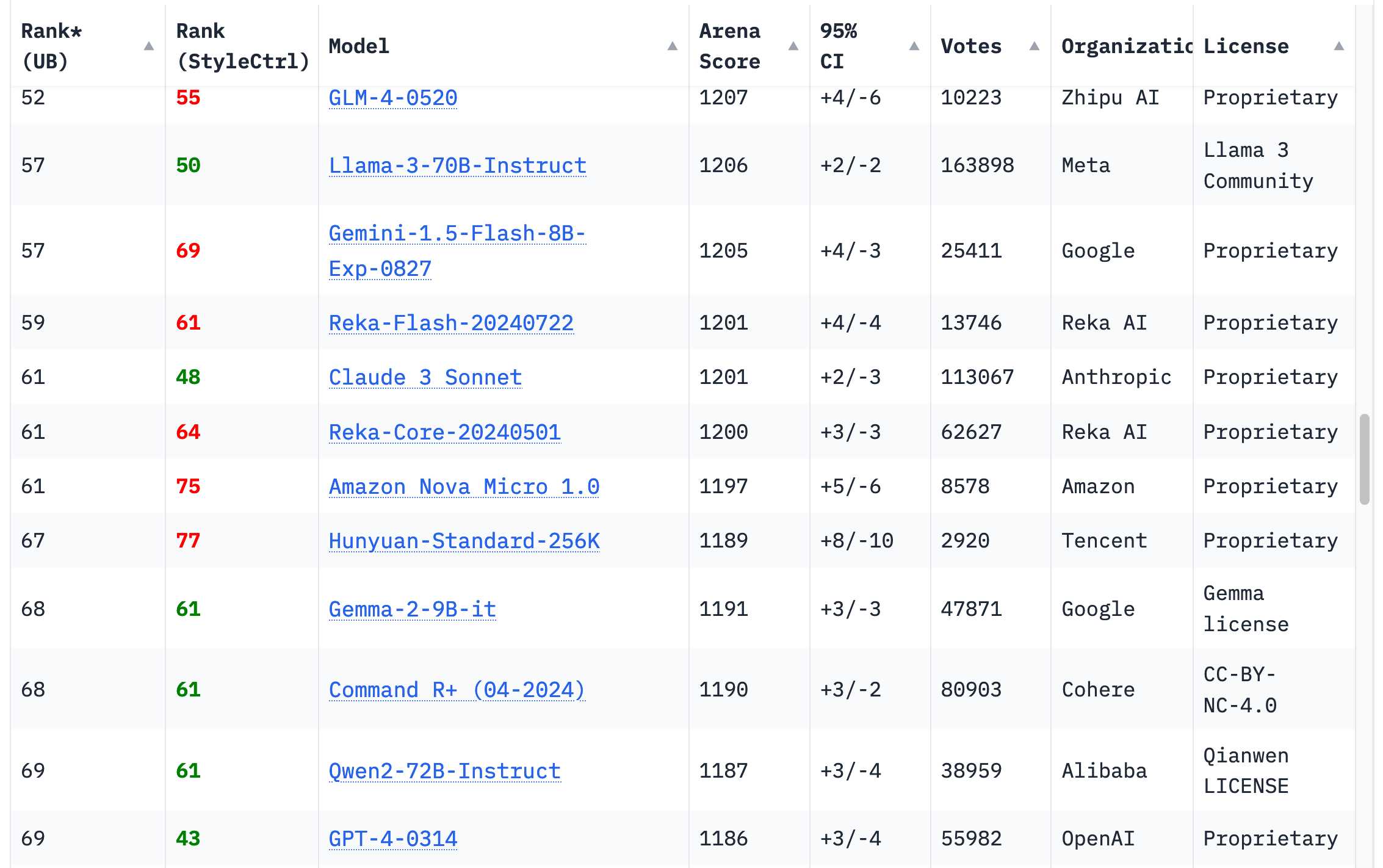
Playground
Run this API
Input Form
Fill in the fields below or .
0.45¢ per article
Est. up to$0.00451 articles
live
curl -X POST "https://api.mindcase.co/v1/data/web/article/run?wait=true" \
  -H "Authorization: Bearer mk_live_YOUR_API_KEY" \
  -H "Content-Type: application/json" \
  -d '{
  "params": {
    "urls": []
  }
}'
Edit the form to update this live.
Related
Related APIs
Web Backlinks API
Backlinks pointing at a domain, with source URL and title, target URL, anchor text and authority scores. Pass the domains.
Web0.8¢ per backlink
Web Brand Styleguide API
A website's brand style guide, with site name, title, description, language and the colors, fonts and logos it uses. Pass the URLs.
Web0.35¢ per style guide
Web Scraping API
Scrape any website into clean Markdown and HTML, with the page title, status code, final URL after redirects and a clear error when a page fails. Scrape a list of URLs, or search by keyword and scrape the top results in one call.
Web0.5¢ per page
Web Sitemap API
Every URL listed in a site's sitemaps, with last-modified date, change frequency, priority and the sitemap file it came from. Pass the site URLs or sitemap URLs.
Web0.01¢ per URL